
Free and Paid Options for Live Greyhound Streaming
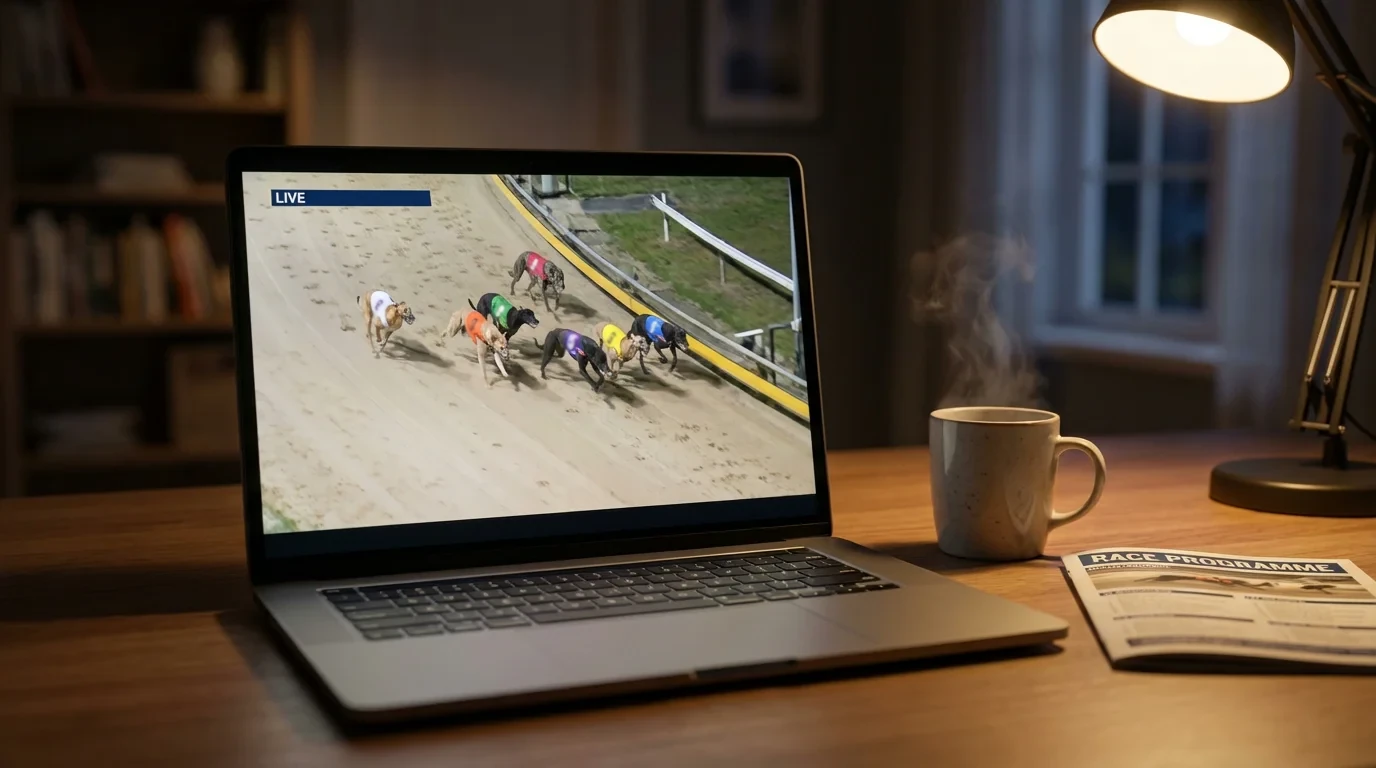
Watching greyhound racing live used to require being at the track. Today, most UK greyhound meetings are available to watch remotely through a combination of free and paid streaming options, and the quality and coverage have improved significantly in recent years. The choice of platform depends on whether you want casual viewing, professional-grade coverage, or a stream that integrates directly with your betting activity. Stay updated at dogracingoddsuk.
RPGTV — Racing Post Greyhound TV — is the most comprehensive dedicated service for UK greyhound racing. It broadcasts live coverage from tracks across the country, including full race programmes from BAGS afternoon meetings and BEGS evening meetings. RPGTV is available as a free-to-view online stream through the Racing Post website and app, and it is also carried by some Freeview and satellite platforms. The coverage includes pre-race analysis, race cards, and results alongside the live action. For the punter who wants a consistent, reliable stream across multiple meetings, RPGTV is the default starting point.
Sky Sports carries selected greyhound racing as part of its broader racing coverage, though the frequency and prominence of greyhound content varies. Major events like the English Greyhound Derby receive dedicated Sky Sports coverage with studio presentation, expert analysis, and full production values. Day-to-day graded racing receives less attention on Sky, and the coverage is typically integrated into multi-sport racing channels rather than standalone broadcasts.
Bookmaker streaming is the most accessible option for active bettors. Several major UK bookmakers — including bet365, William Hill, Paddy Power, and Coral — offer live streams of greyhound meetings directly within their platforms. The typical requirement for access is a funded account or an active bet on the meeting in question. The streams are functional rather than polished — a fixed camera angle showing the track with basic graphics overlay — but they serve the betting punter’s primary need: seeing the race run in real time.
Bookmaker streams have a practical advantage over standalone services: they are integrated with the betting interface. You can watch the race and place bets on the same screen without switching between platforms. The latency on bookmaker streams is generally one to three seconds behind the live action, which is acceptable for pre-race viewing but means you will occasionally see the result on your betting slip before the visual feed catches up.
For punters who attend meetings in person, the on-track experience provides something no stream can replicate — the ability to see the dogs in the parade ring before the race, assess their physical condition, observe their demeanour, and watch the pre-race warm-up. These observations are covered in more detail in the next section, but they represent a genuine informational advantage that remote viewers do not have.
Using Live Streams to Inform Your Betting
A live stream is not just entertainment — it is a source of data that the race card cannot provide. The race card tells you what happened in previous races through numbers and abbreviations. The live stream shows you how a dog runs, how it breaks from the traps, how it responds to pressure, and how it finishes. These visual observations, accumulated over time, build an understanding of individual dogs that pure data analysis cannot replicate.
Pre-race paddock observation is the most underused source of information in greyhound betting. At meetings where the stream or on-track experience includes a view of the dogs being paraded before the race, you can assess physical condition in ways the race card does not capture. A dog moving freely and alertly in the parade ring is likely in good physical order. A dog that appears stiff, reluctant, or agitated may be carrying a minor issue that will affect its performance. These observations are subjective and require experience to interpret reliably, but over time they become a genuine supplementary input to your analysis.
Watching how a dog traps is more informative than reading QAw or SAw on the card. The abbreviation tells you the dog was quick or slow away. The video shows you why. A dog that breaks fast because it is alert, focused, and lunges at the lure the instant the traps open is a fundamentally different proposition from a dog that breaks fast because it was startled or happened to be in a good position. Similarly, a SAw might indicate a genuine trap-start problem, or it might reflect a momentary distraction that is unlikely to recur. The video provides context the comment cannot.
Running style assessment is the third major benefit. The race card will tell you a dog is seeded as a railer, but watching it run shows you how committed it is to the rail, how it handles bends, whether it loses momentum through the turns, and how it responds when challenged by a rival. These are the running style details that inform draw analysis and pace prediction far more precisely than the abbreviated comments on the card.
The practical habit is to watch races even when you do not have a bet running. Watching two or three meetings per week, paying attention to how specific dogs run, how certain trainers’ dogs tend to behave, and how particular tracks favour different running styles, builds a repository of visual knowledge that complements the statistical analysis. When one of those dogs appears on a race card you are studying for a future meeting, the visual memory of how it ran — not just where it finished — gives you an analytical input that most of your competition does not have.
Watching Is Research, Not Entertainment
The temptation with live streaming is to treat it as background viewing — something on in the corner while you do other things, with occasional attention when a race starts. That approach captures the entertainment value of greyhound racing but misses the analytical value entirely.
The shift in mindset is simple but requires discipline. When you watch a race with the intent to learn rather than to be entertained, you watch differently. You focus on the first bend rather than the finish. You note which dogs broke well and which missed the start. You observe how the field sorts itself out through the bends — who is checked, who gets a clear run, who moves wide, who stays on the rail. You watch the dogs after the line, not just at the line, to see which are pulling up strongly and which are clearly spent.
None of this requires special equipment or expertise. It requires attention and a willingness to watch the same types of races repeatedly until the patterns become clear. After watching fifty standard-distance races at the same track, you will have an intuitive sense of how the first bend plays out from different trap configurations. After a hundred, you will start recognising individual dogs by their running style before the commentator identifies them. This accumulated visual literacy is not a luxury — it is a component of serious race analysis that the form card alone cannot provide. Also check our UK greyhound racing calendar.
The practical recommendation is to designate a portion of your weekly greyhound time to watching rather than betting. Pick two or three tracks you follow regularly and watch their meetings, taking brief notes on dogs that catch your eye. When those dogs appear in future races, your notes and visual memory give you context that other punters in the market do not have. The stream is free. The information it provides, if you watch with purpose, is worth considerably more.