
The Annual Greyhound Racing Cycle
UK greyhound racing runs year-round, but it does not run at the same intensity throughout. The sport follows an annual rhythm shaped by daylight, weather, the competition schedule, and the biological cycles of the dogs themselves. Understanding this rhythm gives punters a framework for anticipating when the best betting opportunities arise and when the market is thinnest. Stay updated at dogracingoddsuk.
The calendar year starts slowly. January and February are the quietest months. Fewer meetings run, fields can be smaller at some tracks, and the quality of the racing dips slightly as trainers manage their strings through the tail end of winter. Some dogs are rested during this period, recovering from a busy autumn schedule or being prepared for spring campaigns. The daily BAGS programme continues — afternoon fixtures for betting shop coverage — but the evening BEGS meetings are fewer and the crowds are thinner.
Spring marks the beginning of the competitive season proper. From March onward, the major competitions start their early rounds. Trainers begin to target specific events, and the overall quality of racing improves as dogs return from winter breaks in improved condition. The race programme expands, evening meetings become more frequent, and the depth of fields increases at most tracks. For the betting punter, spring is when the annual form cycle resets — dogs that were in declining form through the winter may suddenly improve as warmer weather and fresh preparation take effect.
Summer is the peak. June through August hosts the sport’s most prestigious events, including the English Greyhound Derby and the Scottish Greyhound Derby. Race quality hits its highest point, fields are strongest, and the betting markets are most liquid. More punters engage during the summer months, which tightens odds on obvious selections but also creates a deeper market where mispriced outsiders can be found. Meetings run most evenings at multiple tracks, providing a volume of opportunity that the rest of the year cannot match.
Autumn transitions from the peak into a steady middle ground. September and October still host significant events — the Golden Jacket, various puppy competitions — and the racing quality remains strong. November sees the early signs of the winter wind-down: shorter days reduce evening attendance, some tracks scale back their fixture lists, and trainers begin managing their dogs’ workloads with the quiet months approaching.
December is mixed. The Christmas and New Year period attracts bigger-than-usual crowds to the tracks, and some venues host feature meetings to capitalise on the holiday appetite for an evening out. The racing quality can be surprisingly high around the festive period, as trainers put forward their best dogs for the increased prize money and public interest. Then January arrives, the cycle resets, and the quiet months return.
Major Events: Where the Best Dogs and Biggest Odds Collide
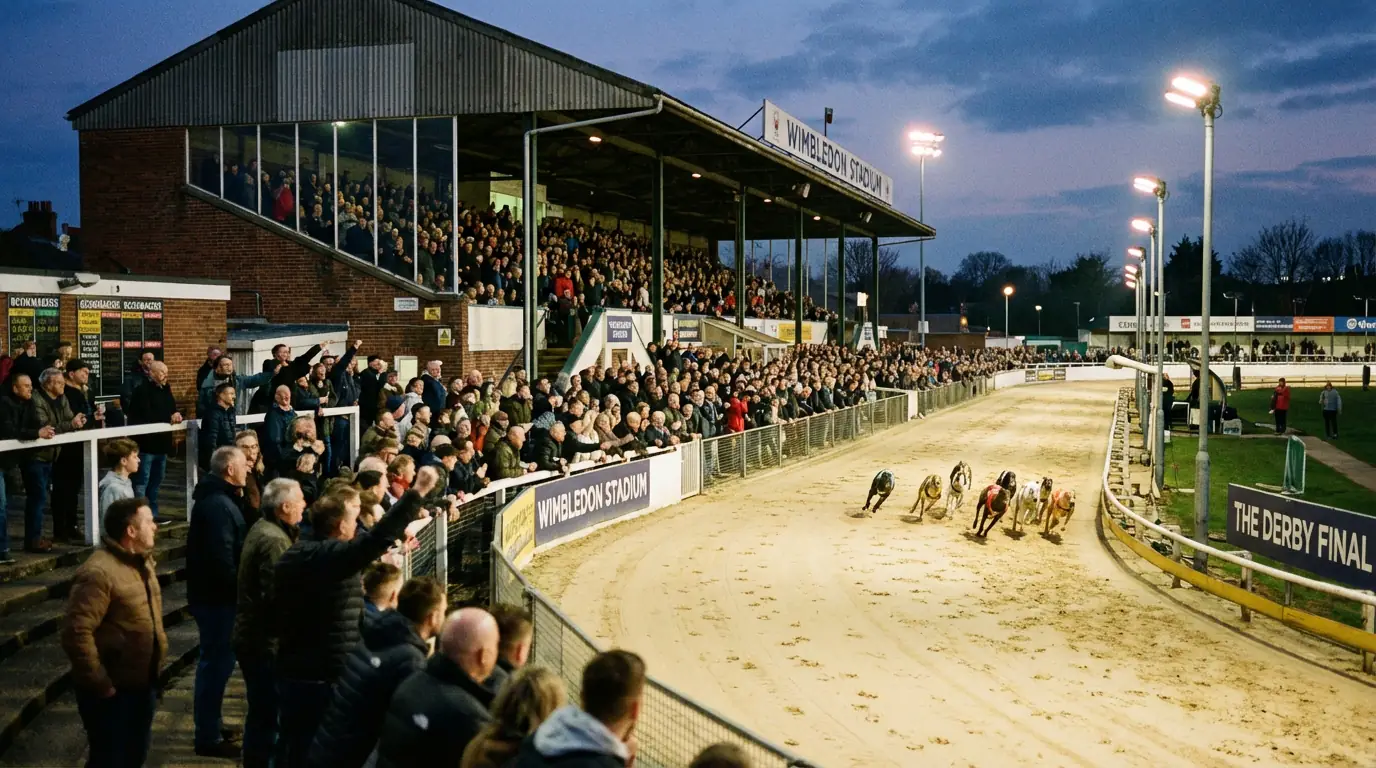
The English Greyhound Derby is the centrepiece of the UK greyhound racing calendar. Held annually — currently staged at Towcester Racecourse in Northamptonshire — the Derby is the sport’s most prestigious race, attracting the best dogs from kennels across the UK and Ireland. The competition runs through multiple rounds of heats and semi-finals before culminating in a six-dog final that carries the year’s biggest purse. From a betting perspective, the Derby is significant not just for its final but for its entire progression: the heat stages provide form data that reshapes the ante-post market, and the semi-final results produce sharp price adjustments in the run-up to the final.
The Scottish Greyhound Derby was historically the second-most prestigious event in the calendar. Traditionally held at Shawfield in Rutherglen, near Glasgow, it followed a similar elimination format and drew a high-quality field, often including several dogs that competed in the English Derby. The Scottish Derby last ran in 2019 before Shawfield’s closure in 2020, and the event has not been staged since.
The Golden Jacket was another marquee competition, held for decades at Crayford in south-east London. The event attracted strong middle-distance fields and provided one of the season’s last major betting opportunities before the winter quietening. However, following Crayford’s closure in January 2025, the Golden Jacket’s future remains uncertain. The Golden Jacket’s shorter distance compared to the Derby produced a different type of race — more dependent on early speed and trap draw, less on stamina — which changed the analytical approach for punters backing into the competition.
Puppy competitions run throughout the year and offer distinctive betting opportunities. Events like the Puppy Derby and various track-specific puppy classics feature younger, less exposed dogs whose form profiles are shorter and less reliable. The information gap is wider in puppy racing, which means the market is less efficient. Trainers with strong puppy development programmes — those who consistently produce well-prepared young dogs — become more important reference points than individual form when assessing these fields.
Category races, invitation events, and track-specific feature meetings round out the calendar. These competitions vary by venue and year but generally attract above-average fields and offer enhanced prize money. For punters, they represent pockets of increased quality and higher betting interest within the routine weekly schedule.
Betting the Calendar: Seasonal Patterns and Form Cycles
The racing calendar does not just organise events — it shapes the form cycle of every dog in training, and that cycle creates predictable patterns the betting market does not always account for. The punter who aligns their activity with the calendar’s rhythms, rather than betting with uniform intensity year-round, operates with a subtle but genuine advantage.
The most significant seasonal pattern affects bitches. Female greyhounds come into season approximately every six months, taking them out of racing for several weeks. The timing varies by individual, but the effect on form is consistent: performance typically dips in the weeks before a season, and the first run or two after returning from a season break may show below-par results as the dog regains race sharpness. Trainers manage this cycle carefully, but the market does not always factor it in. A bitch returning from a season break whose price reflects her pre-break form may be underperforming in the short term, creating a brief window where backing her rivals offers value.
Winter form is generally less reliable as a predictor than form earned in warmer months. Cold, wet conditions affect track surfaces, produce slower going, and can mask a dog’s true ability behind times that look poor compared to summer figures. Dogs that appear to be declining in November and December may simply be racing on surfaces that do not suit their running style or physical condition. The spring improvement — a noticeable uptick in form when warmer, drier conditions return — is a well-documented pattern that the market is slow to price in each year. Dogs that were written off during the winter resurface in March and April with form figures that look dramatically better, and the early races of the spring improvement window often provide generous prices before the market catches on.
The major event cycle creates its own form distortions. In the weeks before a big competition, some trainers deliberately ease their dogs’ workload — running them in lower-grade races or spacing their outings further apart — to ensure they arrive at the event fresh. These preparatory runs can produce middling form figures that understate the dog’s true ability. The punter who recognises a preparation run for what it is, rather than taking the form at face value, can identify dogs priced too long in the early rounds of major events. Also check our greyhound news.
The practical implication of all this is that your betting activity should not be constant. Increase your engagement during the spring improvement window and the major event season, when form is most meaningful and the markets are deepest. Scale back during the winter quiet period, when form is least reliable and the reduced fixture list narrows the selection pool. The calendar is not just a schedule. For the attentive punter, it is a roadmap to the best betting periods of the year.