What Happens When Two Dogs Can’t Be Separated
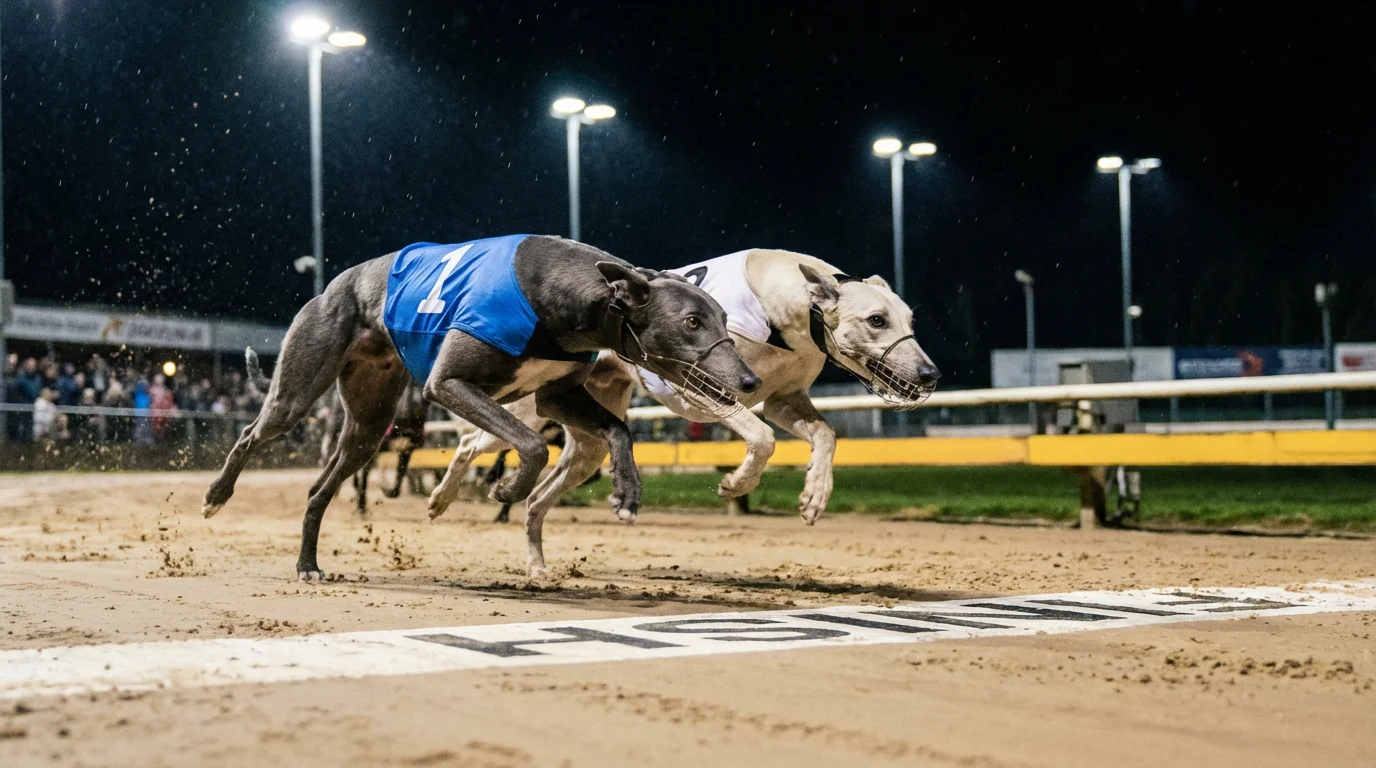
A dead heat occurs when two or more greyhounds cross the finish line at exactly the same moment, and the photo-finish technology cannot separate them. In practice, modern photo-finish cameras at UK tracks can distinguish margins of a hundredth of a second, so dead heats are rare — but they do happen, and when they do, the settlement rules change your payout in a way that catches unprepared punters off guard. Find more betting rules at dogracingoddsuk.
The dead heat rule is standard across all UK bookmakers and applies universally. When two dogs dead-heat for a position, each is treated as having half-filled that position. For a win bet on a dog involved in a dead heat for first place, your stake is halved and settled at the full odds. If you backed the dog at 5/1 with a ten-pound stake, your bet is treated as a five-pound bet at 5/1 — returning thirty pounds total (twenty-five profit plus the five-pound adjusted stake). The other five pounds of your original stake is a losing bet. Your net return is thirty pounds minus your original ten-pound outlay, equalling twenty pounds profit rather than the sixty you would have received from an outright win.
If three dogs dead-heat, your stake is divided by three. The principle remains the same: the fraction of your stake corresponding to your dog’s share of the position is settled at full odds, and the remainder is lost. Three-way dead heats are extremely uncommon in greyhound racing — the six-dog field and the short finishing straight make it unusual for three dogs to be genuinely inseparable at the line — but the rule exists and applies when it occurs.
Dead heats can also occur for places rather than first. In each-way betting, a dead heat for second place affects the place portion of your bet. If your dog finishes in a dead heat for second in a six-runner race where places are paid on the first two, the dead heat rule applies to the place element: your place stake is halved and settled at the place odds. The win element of the bet is lost entirely if the dog did not win. This combination — losing the win bet and receiving half the place payout — is the most common dead-heat scenario that affects each-way punters.
The photo-finish process at UK tracks uses an electronic camera positioned on the finish line that records a continuous image as the dogs cross. The judge reviews this image and either declares a winner or announces a dead heat. There is no discretion involved — if the camera shows two noses on exactly the same plane, the result is a dead heat regardless of how the race unfolded beforehand. A dog that led the entire race and was caught on the line is treated identically to the dog that caught it.
Dead Heats in Forecasts, Tricasts, and Each-Way Bets
Dead heats create more complex settlement scenarios in exotic bet types than in straightforward win bets. Understanding how they apply to forecasts, tricasts, and each-way wagers prevents the unpleasant surprise of a payout that looks nothing like what you expected.
In a forecast bet, a dead heat for first place means there are effectively two results. If Dogs A and B dead-heat for first and Dog C finishes third, the forecast is settled as two half-results: A first / B second and B first / A second. If you had a straight forecast of A first, B second, your bet is treated as half-successful — your stake is halved and settled at the declared forecast dividend. If you had a reverse forecast covering both orders, both halves are activated, but each at half stake, so the net effect is the same as one full-stake payout at the dividend.
A dead heat for second in a forecast creates a similar split. If Dog A wins and Dogs B and C dead-heat for second, your forecast of A first / B second is settled at half your stake at the full dividend. The other half, representing the possibility that C rather than B finished second, is lost.
Tricast dead heats are rarer still and more convoluted. A dead heat for any of the first three positions multiplies the number of possible result permutations, and your bet is settled according to the fraction of those permutations that your selection covers. In practice, a dead heat in a tricast almost always reduces your payout, because your stake is divided among a larger number of possible outcomes.
For each-way bets, the dead-heat impact depends on which position the dead heat affects. A dead heat for first means the win portion of your each-way bet is settled at half stakes at full odds, and the place portion pays in full at place odds — because a dog that dead-heats for first has definitively finished in the first two. A dead heat for second is more damaging: the win portion is a straight loser if your dog did not win, and the place portion is settled at half stakes at place odds. You lose the win bet entirely and receive only half the expected place return.
The arithmetic can be counterintuitive. A punter who backed a dog each-way at 8/1 and sees it dead-heat for second might expect a reasonable place return. In reality, the place odds are 2/1 (quarter of 8/1) and the dead heat halves the effective stake, producing a return of half the normal place payout — which, after deducting the full each-way outlay, can result in a net loss. Working through the numbers before the race, or at least understanding the principle, prevents the confusion that dead-heat settlements routinely cause.
Factoring Dead Heats Into Your Betting Approach
Dead heats are too rare to plan around but too costly to ignore when they occur. The typical greyhound punter will encounter a dead heat affecting one of their bets a few times per year at most. It is not a scenario you can predict, and adjusting your selection strategy to avoid dead heats — however that might work — would be absurd. The dogs do not know or care whether the race will produce a tight finish.
What you can do is understand the financial impact in advance, so that a dead-heat settlement does not come as a shock that distorts your record-keeping or your emotional response. The key principle is simple: a dead heat always reduces your return compared to an outright result in your favour. It never improves it. If your dog dead-heats for first, you receive less than if it had won outright. If it dead-heats for second, the place portion of your each-way bet returns less than if it had finished second alone.
For record-keeping purposes, dead heats should be recorded honestly. The profit from a dead-heat settlement is real, even if it is less than expected. Do not round up to what you would have received from a clean result. The half-stake settlement is the actual outcome, and your records should reflect it. Over a season, the cumulative impact of two or three dead heats on your bottom line is modest, but accurate records allow you to assess your genuine return on investment without distortion.
The one area where dead heats have a marginal strategic implication is in tight finishes at tracks known for producing close results. Tracks with shorter finishing straights — where dogs converge towards the line rather than separating — produce dead heats more frequently than tracks with long, open runs to the finish. If you are placing each-way bets at these venues, the slight statistical increase in dead-heat risk means your expected place return is fractionally lower than the standard calculation suggests. It is a minor adjustment, but the awareness matters if you are calculating expected value precisely. Also read our non-runners in greyhound racing.
Dead heats are one of those features of greyhound betting that most punters learn about the hard way — by opening their account after a race and seeing a settlement that makes no sense until they read the rules. Understanding the mechanics in advance is not about avoiding dead heats. It is about being prepared for them, settling the account correctly in your own records, and moving on to the next race without the frustration of a payout you did not expect and cannot explain.