
Tricast Mechanics: First, Second, Third — In Order
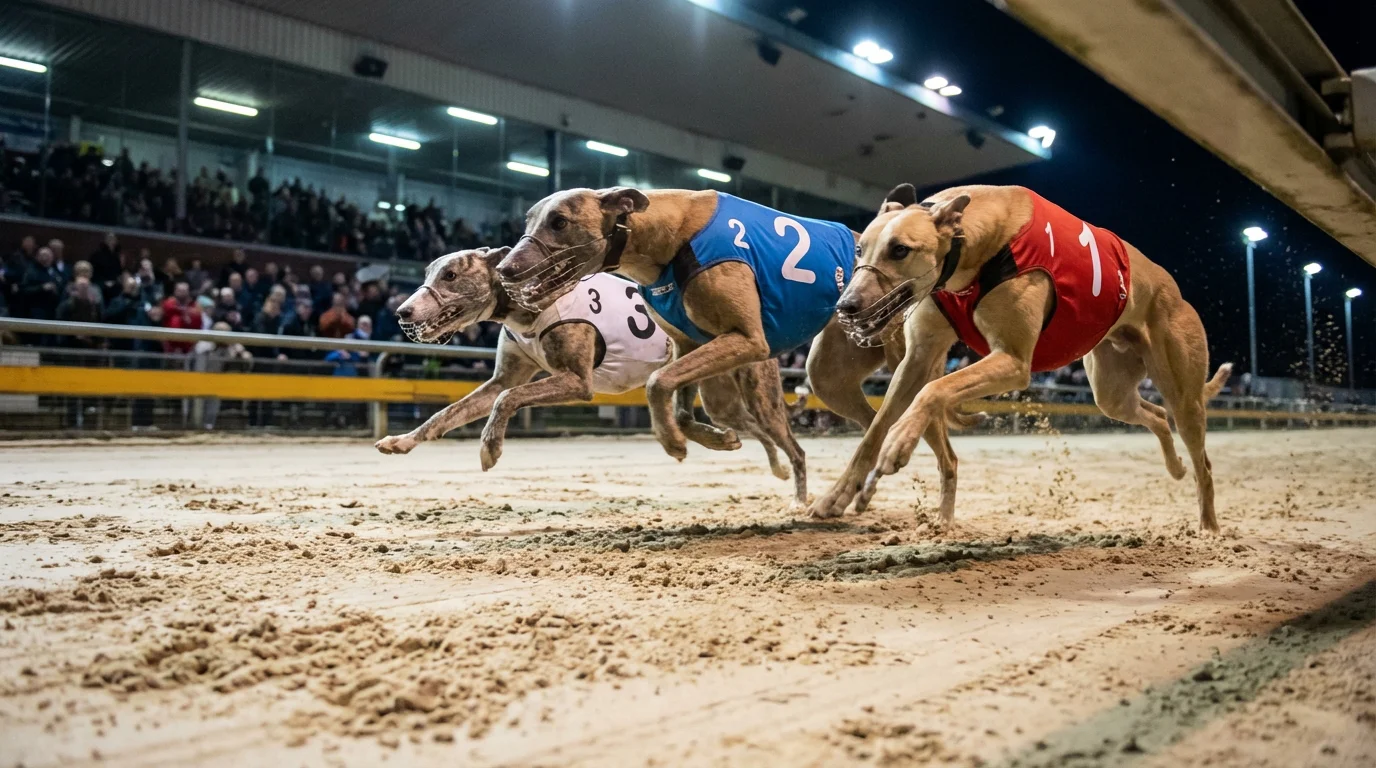
120 possible outcomes, one winning combination — that’s the tricast in a number. A straight tricast requires you to predict the first three finishers of a greyhound race in the exact order. Not just the winner. Not just the first two. All three, in precise sequence. In a six-dog race, the number of possible permutations for the top three is 6 x 5 x 4 = 120. Your straight tricast covers exactly one of those 120 outcomes. Find more bet type guides at dogracingoddsuk.
The difficulty is real, and the pricing reflects it. Tricast dividends are calculated by a computer formula after the race, based on the starting prices of the first, second, and third-place finishers. The longer the combined odds of those three dogs, the larger the dividend. A tricast involving three outsiders at 6/1, 8/1, and 10/1 returns vastly more than one involving the 6/4 favourite, the 3/1 second favourite, and the 4/1 third choice. Dividends can range from single figures in the most predictable races to several hundred pounds from a one-pound stake in wide-open contests.
The placement process is straightforward. You select your first, second, and third-place finishers in order, specify your stake — the minimum is usually fifty pence — and the bet is recorded. After the race, if your three selections finish in exactly the order you specified, the dividend is applied to your stake. If the order is wrong in any position, the bet loses outright. There is no partial payout. Close does not count.
One structural point worth understanding: the tricast dividend is not derived from the forecast dividend with an added layer. It is a separate calculation with its own formula, and the relationship between forecast and tricast dividends for the same race is not linear. A race producing a modest forecast can still yield a large tricast if the third-place finisher was a long-priced outsider, because that dog’s SP has a multiplicative effect on the overall payout.
Combination Tricasts: Covering the Permutations
Combination tricasts multiply your outlay but compress the difficulty. If predicting the exact order of three dogs sounds daunting — and it should — then a combination tricast offers a less precise but more forgiving alternative. Instead of naming the exact finishing order, you select three or more dogs and cover every possible permutation of them filling the top three positions.
The maths scales fast. Three dogs in a combination tricast covers six possible arrangements — 3 x 2 x 1 = 6 bets. At fifty pence per line, that is three pounds total. Four dogs covers twenty-four permutations at a cost of twelve pounds. Five dogs: sixty permutations, thirty pounds. Each additional selection dramatically multiplies the cost.
Three dogs is the sweet spot for most punters. The outlay is manageable, the coverage is meaningful, and the dividend only needs to exceed a few pounds to deliver profit. The critical condition is that your three selections must genuinely be the three most likely to fill the frame. If one finishes fourth while a dog you excluded finishes third, all six permutations lose. Coverage within your selection is broad; coverage against the rest of the field is zero.
Four-dog combinations are a reasonable step up in genuinely open races where you cannot confidently eliminate more than two dogs from contention. The twenty-four-bet cost means the dividend must be substantial to show a profit. At small unit stakes this remains viable — a twelve-pound outlay against dividends that frequently land in the thirty to one hundred pound range for open fields is an acceptable risk-reward profile. Beyond four dogs, the costs become prohibitive for all but the largest dividends.
One tactical consideration: in a combination tricast, the dividend depends on which specific permutation occurs. If your three dogs finish in the order that produces the smallest dividend — typically the shortest-priced dog first, the next shortest second — the return is lower than if they finished in a more unexpected order. You cannot control this, but you can factor it into race selection. Races where the three contenders are similarly priced tend to produce more consistent dividends regardless of the finishing order, reducing the variance in your returns.
Finding Tricast Races: Selection Criteria
The tricast race reveals itself when one dog is certain and the rest are chaos. Not every race is a tricast race, and betting tricasts across an entire card is a reliable method for emptying a bankroll. The edge lies in identifying the specific conditions that make a tricast rational rather than speculative.
The strongest tricast setup is a race with a dominant favourite and an open contest for the minor places. When a dog is a clear class above the rest — backed down to odds-on or near it — the first-place finisher is relatively predictable. The tricast value comes from the second and third positions, where three or four dogs of similar ability are competing for the remaining places. A straight tricast with the favourite first and your best two picks for second and third can offer a meaningful dividend at a one-pound stake, because the longer-priced dogs filling the minor places inflate the overall payout.
The second useful profile is a race with a clear trap draw advantage. If two dogs have favourable inside draws with strong early speed, and a third has a running style that guarantees it runs on for a place, the first-bend dynamics are predictable enough to justify a tricast structure. You are not guessing — you are reading the draw and constructing a scenario based on how the dogs are likely to run. The draw provides structure; the tricast provides leverage.
Class mismatches are the third indicator. When a dog drops two or three grades and faces significantly weaker opposition, the grading system has effectively identified the probable winner for you. Pairing that dog with two runners who consistently fill minor places at the lower grade — dogs whose form figures show repeated seconds and thirds — creates a tricast built on structural logic rather than hope.
The races to avoid for tricasts are those where six dogs of nearly identical ability and form compete at the same grade with no clear draw advantage. These are pass territory. The more uncertain the top three, the more a tricast resembles a lottery ticket rather than a calculated position.
Small Stakes, Long Memory: The Tricast Mindset
Tricasts reward the punter who can lose fifty times and still back the fifty-first. That sentence is not hyperbole — it is the mathematical reality of this bet type. Even a skilled form reader, equipped with thorough trap draw analysis and deep kennel knowledge, will land a straight tricast somewhere between two and five percent of the time. Combination tricasts improve the strike rate to perhaps eight to twelve percent with three dogs, but the per-bet cost is higher.
The psychology of tricast betting is therefore as important as the maths. You must accept long losing runs as the cost of entry. A punter who hits two tricasts in a month at dividends of eighty and a hundred and fifty pounds has earned two hundred and thirty — but if they placed forty combination tricasts at six pounds each over that month, the total outlay was two hundred and forty. A net loss despite two substantial payouts. The numbers only work if race selection is ruthless and staking is controlled.
Small stakes are not a suggestion — they are a structural requirement. The entire tricast approach is predicated on low probability and high potential return. A one-pound straight tricast that pays two hundred is a legitimate edge if the cost of losing bets that preceded it totals less than two hundred. A five-pound tricast habit accelerates the loss curve dramatically and requires proportionally larger — and rarer — dividends to recover. Also see our greyhound bet types explained.
The punter who thrives with tricasts treats them as a selective supplement to their main betting activity, not the primary approach. They identify two or three tricast opportunities per meeting, invest small fixed stakes, and evaluate results over months rather than days. A single week’s results tell you nothing about the viability of the method. A three-month sample across a consistent selection process starts to reveal whether the dividends are covering the outlay. The patience to wait for that sample — and the discipline to maintain the method while the losses accumulate — is the tricast punter’s defining characteristic.