

Why Responsible Betting Matters in a High-Frequency Sport
Greyhound racing is one of the fastest-turnover betting sports in the UK, and that pace creates risks that slower sports do not. A typical evening meeting runs twelve to fourteen races over three hours, with roughly fifteen minutes between each off. For the punter watching live or on a stream, that is a new betting opportunity every quarter of an hour — a relentless cycle of anticipation, decision, outcome, and reset that tests discipline in ways that a Saturday afternoon of football or a day at the horse races does not. Bet safely — start at dogracingoddsuk.
The speed of the cycle matters because it compresses the emotional response loop. In horse racing, there might be seven races across an afternoon, with half-hour gaps that provide natural cooling-off periods. In greyhound racing, the gap between races is barely enough to study the next card, let alone process the emotional aftermath of a losing bet. Frustration from race six bleeds into the analysis for race seven. The impulse to recover a loss — one of the strongest psychological drivers in gambling — has almost no time to dissipate before the next opportunity presents itself.
The availability factor amplifies this. Greyhound racing runs throughout the day and into the evening, six or seven days a week. BAGS meetings cover the afternoon; BEGS meetings cover the evening. For a punter with online access, there is rarely a moment during waking hours when a greyhound race is not about to start somewhere in the UK. This constant availability means that the decision to stop betting is never enforced by the absence of opportunity — it must always be a deliberate, active choice.
None of this is unique to greyhound racing, but the combination of high frequency, short intervals, and near-constant availability makes it a sport where the line between enjoyable betting and problematic betting can blur quickly. The tools and practices described below exist to keep that line visible.
Tools Available: Deposit Limits, Self-Exclusion, GamStop
Every licensed UK bookmaker is required by the Gambling Commission to offer a suite of responsible gambling tools. These are not suggestions or optional extras — they are mandatory features of every licensed operator’s platform. Knowing what is available and how to activate it puts you in control of your betting environment before you need to rely on willpower alone.
Deposit limits allow you to set a maximum amount that can be deposited into your betting account within a specified period — daily, weekly, or monthly. Once the limit is reached, no further deposits are accepted until the period resets. Reducing a deposit limit takes effect immediately. Increasing one typically requires a cooling-off period of twenty-four to seventy-two hours, depending on the operator. This asymmetry is deliberate: it is easy to impose discipline and difficult to remove it in a moment of impulse.
Loss limits work similarly but cap the net losses within a period rather than the deposits. If you set a weekly loss limit of fifty pounds and reach that figure by Wednesday, you cannot place further bets until the following week regardless of how much money remains in your account. Loss limits are a more direct control on the financial impact of betting, while deposit limits control the cash flow into the account.
Session time limits and reality checks are reminders rather than hard stops. A reality check is a notification that appears after a set period of continuous activity — say, one hour — informing you of how long you have been logged in and, in some implementations, how much you have won or lost. It is a prompt to pause, assess, and decide consciously whether to continue. Research consistently shows that these interruptions reduce the total time and money spent per session, even when the punter chooses to continue after the notification.
Self-exclusion is the most definitive tool. It allows you to block yourself from a specific bookmaker’s platform for a set period — typically six months, one year, or five years. During the exclusion period, you cannot log in, place bets, or access your account. The operator is obligated to close your account and return any remaining balance. Self-exclusion is a serious step, and it is designed to be: it is for punters who have recognised that their betting is no longer under control and who need an external barrier to enforce a break.
GamStop is the national self-exclusion scheme for online gambling in the UK. Registering with GamStop excludes you from all licensed online gambling operators — not just one — for a minimum period of six months, extendable to one year or five years. It is free to use and can be registered through the GamStop website. For punters whose issue extends beyond a single bookmaker, GamStop provides a comprehensive barrier across the entire UK online betting landscape.
For on-course betting at greyhound tracks and betting shops, the GAMSTOP Betting Shops scheme (formerly known as MOSES — Multi-Operator Self Exclusion Scheme) covers physical betting premises. Registering with this scheme prevents you from using specified betting shops for the chosen exclusion period. This is relevant for punters who primarily bet at the track or in high-street shops rather than online. A separate scheme, SENSE, covers land-based casinos specifically.
The common thread across all these tools is that they work best when activated proactively — before you need them, not after. Setting a deposit limit on the day you open an account costs you nothing if your betting remains under control. But if your betting escalates, the limit is already in place, quietly doing its job before the situation reaches a point where you might not choose to set one. Think of these tools as infrastructure. You build the guardrails when the road is clear, not when you are already skidding.
The Punter’s First Rule
Betting should be enjoyable. If it is not, something has gone wrong. This is not a moral judgement — it is a practical diagnostic. The moment betting stops being an activity you choose for its own pleasure and starts being something you feel compelled to do, or something that generates anxiety rather than anticipation, or something you hide from people close to you, the relationship between you and the activity has changed in a way that no staking plan or selection method can fix.
The self-assessment is straightforward. Do you bet with money you can afford to lose, every time, without exception? Do you set limits before a session and stick to them? Can you walk away from a losing evening without increasing your stakes? Do you take breaks of days or weeks without feeling restless or compelled to bet? If the answer to any of these is no — honestly no, not the answer you would like to give — then the tools described above are not optional extras. They are necessary supports.
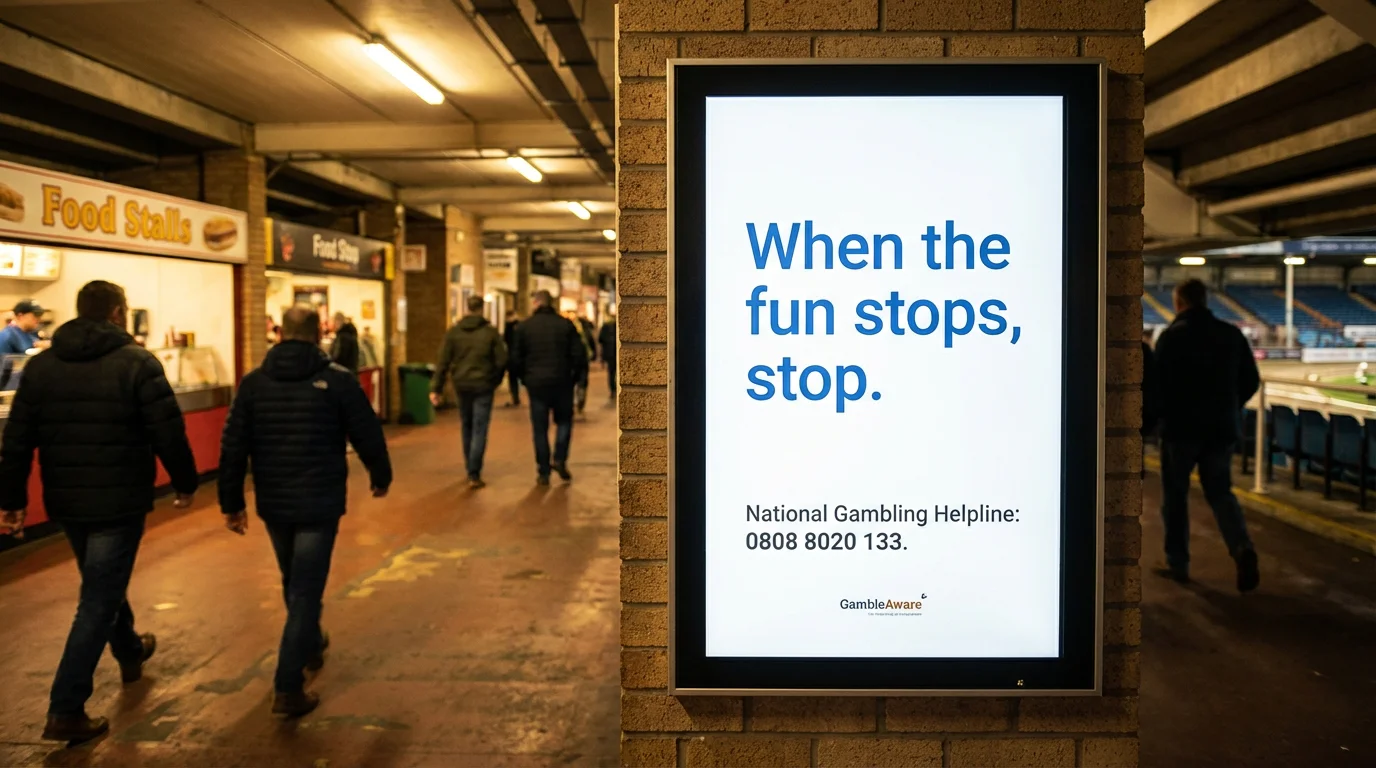
There is no shame in using them. Deposit limits are not a sign of weakness any more than a seatbelt is a sign of bad driving. They are sensible precautions built into a system that is explicitly designed to manage risk. The punter who sets a fifty-pound weekly deposit limit, activates reality checks at one-hour intervals, and takes a month off when the fun stops is not less serious about their betting — they are more serious, because they are managing the one risk that no amount of form analysis can address: the risk that the betting itself becomes the problem. Also read our greyhound betting bankroll management.
If you or someone you know is struggling with gambling, practical support is available. The National Gambling Helpline provides free, confidential advice and can be reached on 0808 8020 133. It is staffed by trained advisors who understand the specific dynamics of sports betting and can help you assess your situation without judgement.