

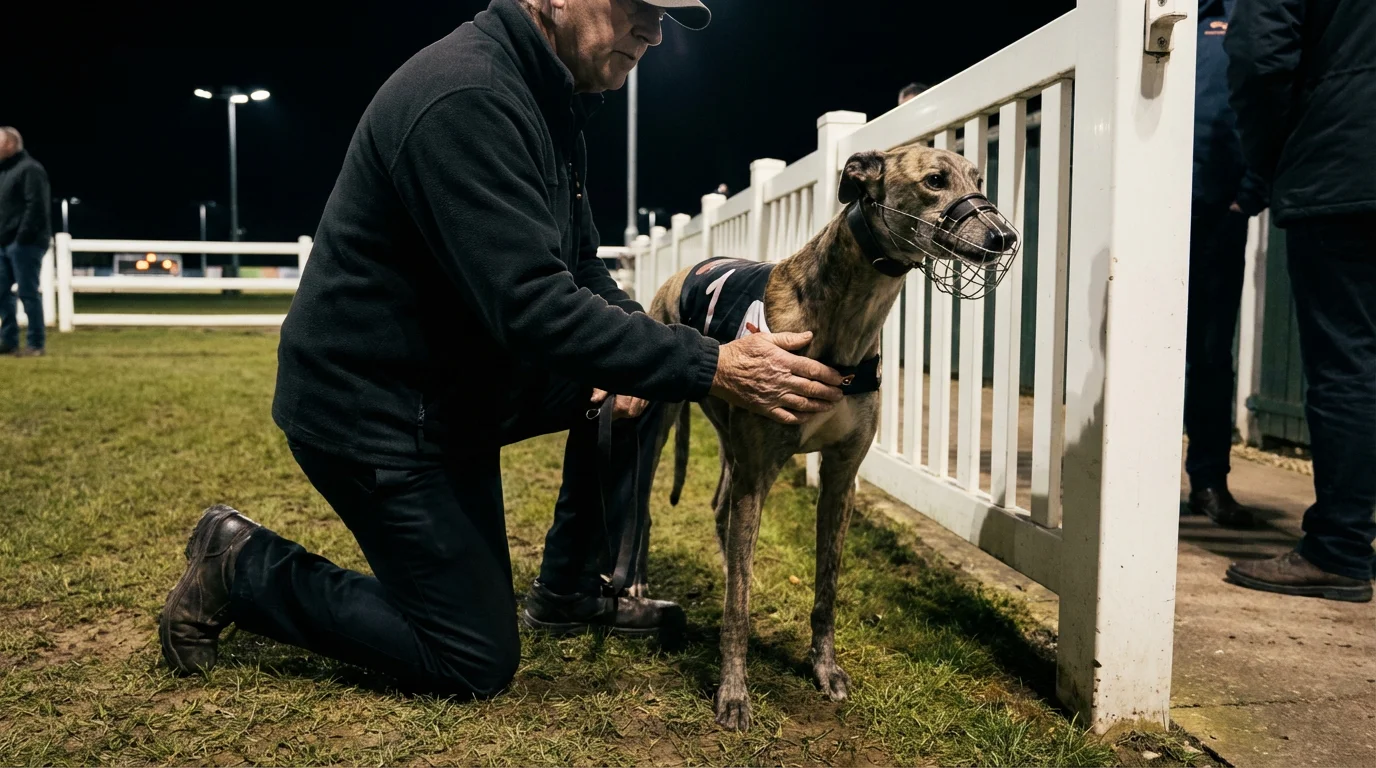
The Trainer’s Role in Greyhound Performance
The trainer’s name on a race card is not decoration — it is data. In greyhound racing, the trainer is responsible for the dog’s conditioning, fitness, diet, training regime, racing schedule, and track selection. Two dogs of identical breeding and raw ability can perform at vastly different levels depending on who prepares them for the track. The trainer’s influence over a greyhound’s racing performance is more direct and more measurable than in most other sports, yet a surprising number of punters overlook it when analysing a race. Get more form data at dogracingoddsuk.
The conditioning aspect is the most tangible. A well-trained greyhound arrives at the track in peak physical shape — the right racing weight, properly muscled, fresh from an appropriate training schedule. The trainer decides when the dog is ready to race and when it needs a rest. An overtrained dog, raced too frequently without adequate recovery, will show a gradual decline in form that the race card records but does not explain. The trainer’s decision to rest or run a dog is invisible to the punter reading the card — but the consequences of that decision are written in the form figures.
Track selection is the second critical input. Many trainers operate primarily at one or two venues where they have kennels nearby and where they know the track’s characteristics intimately. A trainer who sends a dog to a track where the circuit suits its running style — a railer to a tight track, a strong stayer to a galloping circuit — is maximising that dog’s chance. A trainer who enters a dog at an unsuitable venue, perhaps because a slot was available rather than because the track fits, is handicapping it before the traps open.
The racing programme — how frequently a dog races and at what intervals — is entirely the trainer’s call. Some trainers run their dogs twice a week; others space runs out with ten or more days between outings. The best trainers match the programme to the individual dog’s needs, increasing frequency for dogs that benefit from regular competition and spacing runs for dogs that perform better when fresh. The punter who notices that a particular trainer’s runners tend to peak after a specific preparation pattern — two runs close together followed by a break, or always best on a Monday night rather than a Saturday — has spotted a genuine informational edge.
The emotional dimension should not be underestimated either. Greyhounds are sensitive animals, and the kennel environment affects their temperament and therefore their performance. A calm, well-managed kennel produces relaxed dogs that arrive at the track ready to race. A chaotic or poorly managed kennel produces anxious dogs that may trap poorly, react badly to the crowd, or fail to settle into their running rhythm. This is nearly impossible to quantify from the race card, but it manifests in the results — and trainers with consistently well-prepared, well-settled runners outperform their peers over time.
How to Use Trainer Stats in Betting Decisions
The most useful trainer statistic is the simplest: win rate at the track where the dog is racing today. A trainer who sends out fifteen percent winners at a given venue over a sustained sample is performing above the random expectation of roughly seventeen percent in a six-dog field — but not dramatically so. A trainer who sends out twenty-five percent winners at the same venue is doing something measurably right. A trainer whose win rate at a particular track sits below ten percent is either sending dogs to the wrong venue or struggling with conditioning.
Track-specific records matter more than overall records. A trainer might have a modest aggregate win rate across all tracks but an excellent record at one specific venue where they understand the circuit, have kennels nearby, and know exactly which dogs suit the track. Conversely, a trainer with a strong overall reputation might have a blind spot at a certain track where their typical running style does not translate. Evaluating trainers at the venue level rather than in aggregate produces a more accurate picture.
Kennel form trends — the recent performance of a trainer’s entire string rather than a single dog — offer a second layer of analysis. When a kennel is running hot — producing winners or placed dogs across multiple runners over a two-week period — it typically indicates that the training and conditioning programme is working well and the dogs are arriving at the track in peak form. This trend tends to persist for several weeks before regressing. Conversely, when a kennel goes cold — a trainer’s runners consistently underperforming their market position — it can signal a systemic issue: an illness running through the kennel, a change in training routine, or simply a cycle of fatigue after a busy period.
Trainer changes are the highest-impact single event in trainer analysis. When a dog transfers from one kennel to another, its form can transform overnight. A dog that showed declining form under its previous trainer might improve immediately under new management if the new trainer’s methods, facilities, or track access better suit it. The market is slow to price in trainer changes because most punters assess form based on the results listed on the card without checking whether the trainer has changed since those results were recorded. The first two or three runs under a new trainer are an information vacuum that creates mispricing in both directions — too short if the market assumes the new trainer will automatically improve the dog, too long if the market has not noticed the change at all.
One practical method for tracking trainer performance is to maintain a simple log. Note the trainer’s name, the track, and the result for every bet you place. After a few months, you will have enough data to identify which trainers consistently outperform at your preferred venues and which consistently underperform. This is not sophisticated analysis — it is record-keeping — but it produces actionable intelligence that most of your competitors in the betting ring do not bother to collect.
When the Trainer Matters More Than the Dog
There are situations in greyhound racing where the trainer is a more reliable predictor of the result than the dog’s own form figures. These situations are uncommon but valuable, and recognising them gives you an edge that is difficult for the broader market to replicate.
The most obvious case is the debutant or maiden. When a dog has no form — or only one or two recorded runs — the race card provides almost nothing to analyse. The trainer, however, has spent weeks or months preparing the dog and knows exactly what it is capable of. Certain trainers have a reputation for producing well-prepared first-time runners that outperform their market position. Their kennel record with debutants is a statistical fact, and it tells you more about the dog’s likely performance than any form figure could.
Trainer expertise with specific race types is another indicator. Some kennels specialise in stayers, producing a disproportionate number of winners over longer distances. Others excel at sprint racing. When a dog from a staying specialist kennel appears in a stayers’ race at a venue where the trainer has a strong record, the combination of kennel expertise and venue suitability is a powerful signal — stronger, potentially, than the dog’s individual recent form.
Post-break returns are the third scenario. When a dog returns from a lay-off — whether through injury, seasonal break, or a deliberate rest — the trainer’s track record with returning dogs is more informative than the stale form figures on the card. A trainer who routinely has dogs ready to perform first time back is adding value that the market, anchored on the dog’s pre-break form, often does not fully price in. Also read our greyhound form guide.
The broader principle is that the trainer’s contribution to greyhound racing is systematic, not anecdotal. It appears in win rates, in track-specific records, in the performance of debutants and returning dogs, and in the trends of the kennel as a whole. The punter who integrates trainer analysis into their race-by-race assessment — not as the primary factor, but as a consistent supplementary input — is working with information that most of the market ignores. In a sport where edges are thin and the margins between profit and loss are narrow, that additional layer of analysis can make the difference.