

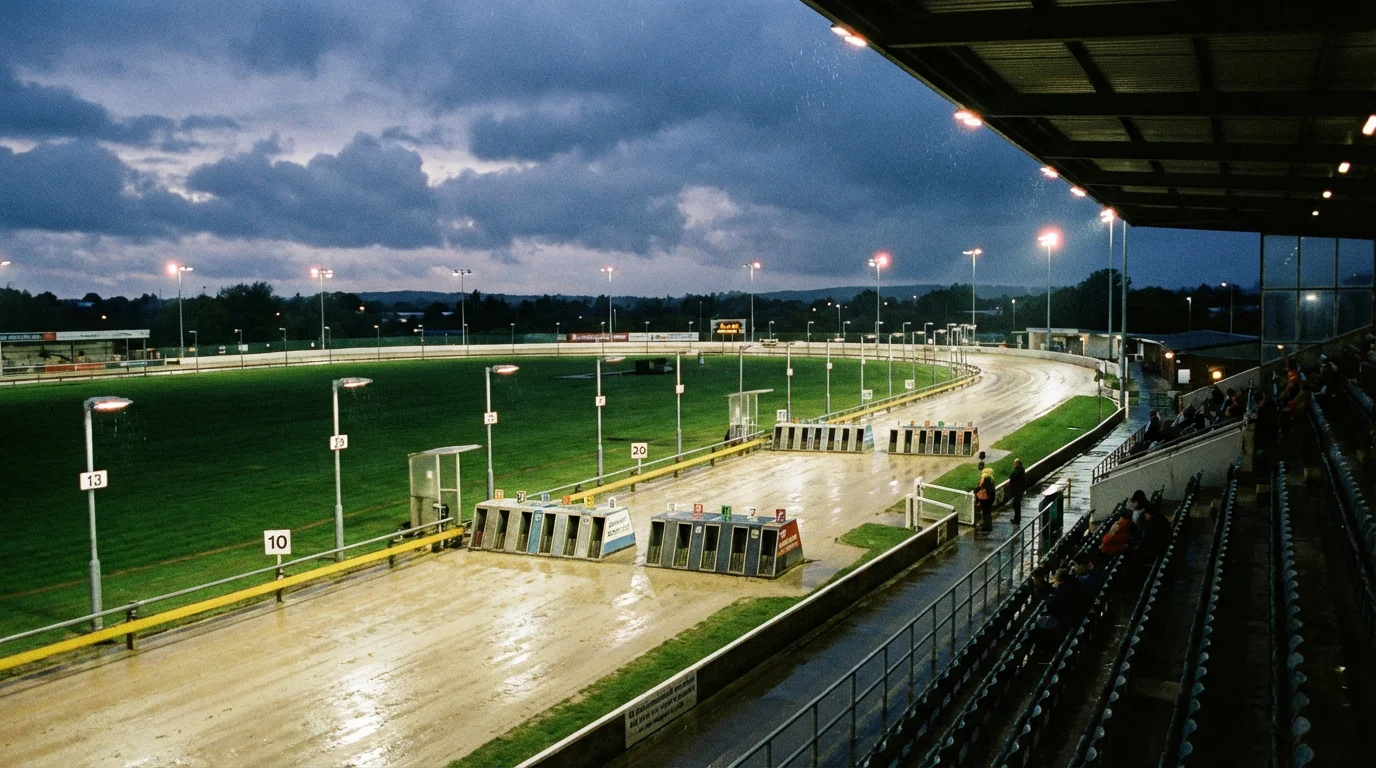
Distance Categories in UK Greyhound Racing
UK greyhound racing operates across three broad distance categories, and each produces a fundamentally different type of race. The distance does not just determine how far the dogs run — it determines what qualities matter, how the draw influences the result, and how the betting market should be approached. A punter who applies the same analysis to a 270-metre sprint and a 714-metre marathon is making a category error that the market will quietly punish. Find more race guides at dogracingoddsuk.
Sprint races cover the shortest distances, typically between 260 and 300 metres depending on the track. Not every venue offers sprints — they require a start position that allows a short run to the first bend and a truncated circuit, which some track layouts cannot accommodate. Sprints are fast, chaotic, and decided almost entirely in the first few seconds. The dog that breaks fastest from the traps and reaches the first bend in front will win the vast majority of sprint races, because there is simply not enough distance for any other dog to recover from a slow start or first-bend interference.
Standard distances are the backbone of UK greyhound racing. Most tracks run their graded programme over a standard trip that falls between 450 and 500 metres, with 480 metres being the most common. These are the races that form the daily BAGS and BEGS schedule, and they represent the vast majority of betting opportunities. Standard-distance races balance early speed with sustained pace — the first-bend leader still holds a significant advantage, but closers have enough track remaining to make up ground if the early pace falters or if the leader encounters trouble on the bends.
Staying races cover 630 metres and above, with some tracks offering marathon trips of 714 metres or more. Stayers’ races are less frequent than standard events and attract smaller fields at some venues, but they produce a distinctly different type of race. Stamina becomes the dominant factor. A dog with explosive early speed but limited endurance may lead through the first two bends and fade visibly in the closing stages. A dog with a moderate turn of speed but deep reserves of stamina — the type that race comments describe as Styd or RnOn — comes into its own over these longer trips.
The distances are not standardised across tracks. A standard race at Romford might be 400 metres, while a standard race at Nottingham is 500. This variation means that direct time comparisons between tracks are unreliable without adjustment. A 29.50-second time at Romford over 400 metres is not comparable to a 29.80 at Nottingham over 500 — the distances, circuits, and race dynamics are entirely different. Every assessment of a dog’s times must be made within the context of the specific track and distance at which those times were recorded.
How Distance Changes the Betting Equation
Sprints are pace-dependent and, relatively speaking, more predictable. The shortened distance compresses the race into a few seconds of action, and the variables that can disrupt a result — interference, pace collapse, late stamina — have less time to manifest. The dog with the fastest trap break and the best inside draw wins more often than in any other distance category. For betting purposes, this means the form indicators that matter most in sprints are early speed (QAw, VQAw, EP) and trap position. Recent finishing positions and overall times are less informative than the first-sectional split and the race comments describing the first bend.
The market generally prices sprint races more efficiently than other distances because the predictability is higher. Favourites win more often in sprints, and the prices on those favourites tend to be tight. Finding value in sprint betting requires a narrow focus: identifying dogs whose early speed is underestimated by the market, or whose draw advantage has not been fully priced into the odds. The opportunities exist but are slimmer than at other distances.
Standard-distance races offer the richest betting landscape. The balance between early speed and sustained effort creates more variables, more potential for disruption, and more situations where the market misprices a runner. Form analysis, class assessment, draw reading, and pace prediction all contribute meaningfully to the selection process. The winner of a standard race might be the first-bend leader, a dog that came from mid-division after the pace collapsed, or a closer that timed its run perfectly. This variety increases uncertainty but also increases the number of angles from which a skilled punter can find an edge.
Forecast and tricast dividends tend to be larger at standard distances than in sprints, because the results are less predictable and the finishing order is more variable. If you specialise in exotic bets — forecasts, tricasts, combination bets — standard races provide the best balance of dividend size and analytical opportunity.
Staying races invert many of the principles that govern shorter trips. Early speed still matters — the first-bend leader has an advantage at any distance — but that advantage diminishes as the race length increases. Over 630 or 714 metres, the field has two additional bends and an extended final straight in which to sort itself out. Dogs that lead early and fade late produce longer-priced winners in the minor places, which inflates forecast and tricast dividends. Staying races are where the biggest dividends in greyhound betting are regularly found.
The betting challenge with stayers is that stamina is harder to quantify from a race card than speed. You can measure a dog’s first-sectional time and assess its early pace with precision. Measuring its stamina reserves requires inference — looking at finishing comments, performance over longer trips in the past, and whether the dog has maintained its position through the final two bends in recent races. This uncertainty makes staying races inherently less predictable, which is bad for strike rate but excellent for the punter who can evaluate stamina more accurately than the market.
Matching Distance to Bet Type
The distance of a race should directly influence not just your selection but the type of bet you place. Sprints, with their high predictability and compressed action, favour win singles and short-priced doubles. The favourite wins often enough that backing it at tight odds still produces a positive return for a punter who selects correctly. Exotic bets in sprints tend to return smaller dividends because the finishing order is more predictable.
Standard distances are versatile. Win bets, each-way bets, forecasts, and tricasts all have a place in the standard-race toolkit. The choice depends on the race profile: a clear favourite in a standard race might justify a win single, while an open field at the same distance is better served by a forecast on the two dogs you rate highest. The flexibility of standard racing is its greatest asset for the analytical punter.
Staying races are forecast and tricast territory. The increased unpredictability means win betting at level stakes is a grind — the strike rate drops, and the returns at SP are rarely generous enough to compensate. But the forecast and tricast dividends from staying races can be outsized, because the finishing order is less tightly correlated with the pre-race market. A dog that leads for five bends and fades to third is a common result in stayers’ races, producing finishing orders that the market did not expect and dividends that reward the punter who anticipated the pace scenario. Also explore our UK greyhound tracks guide.
The discipline is to let the distance tell you how to bet, not the other way around. A punter who insists on win singles regardless of distance is leaving value on the table in staying races and paying unnecessary complexity costs in sprints. A punter who insists on forecasts in every sprint is paying double stakes for a finishing order that the win bet already captures at better value. The distance sets the terms. Your bet selection should respond to them.