Types of Greyhound Betting Promotions
UK bookmakers offer a range of promotional deals on greyhound racing, and while the headlines are designed to attract attention, the details determine whether the offer adds genuine value to your betting or merely shifts your behaviour in the bookmaker’s favour. Knowing the landscape helps you take what is useful and ignore what is not. Find more bonus guides at dogracingoddsuk.
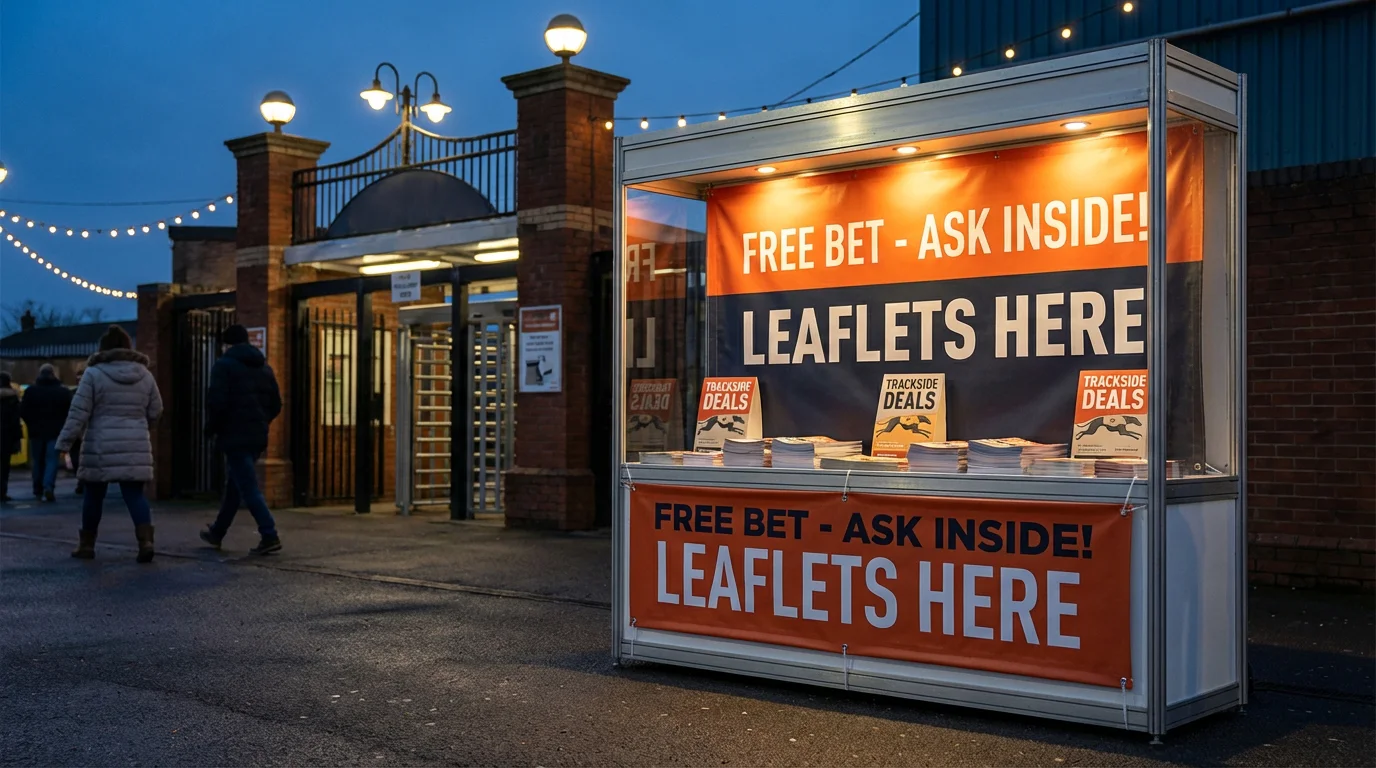
Welcome offers are the most prominent. These are aimed at new customers and typically take the form of a matched free bet: deposit a certain amount, place a qualifying bet, and receive a free bet of equal or lesser value. Some welcome offers are specifically designed for greyhound racing; others are general-purpose promotions that can be used on any sport including dogs. The free bet is usually credited as a non-withdrawable token — you can place a bet with it, but only the winnings (minus the free bet stake) are withdrawable. This distinction matters: a twenty-pound free bet at 4/1 returns eighty in winnings, not a hundred.
Reload offers and loyalty promotions target existing customers. These might include a weekly free bet for placing a certain number of greyhound bets, a cashback deal if your selections lose over a specific period, or enhanced odds on selected races. Reload offers are generally smaller in value than welcome bonuses but can be more useful in practice, because they apply to ongoing betting activity rather than a one-time event.
Price boosts are specific odds enhancements on individual selections. A bookmaker might boost the odds on the favourite in a feature greyhound race from 2/1 to 3/1, for example, with a maximum stake applied to the boosted price. Price boosts are straightforward — if the boosted price exceeds your own assessment of the dog’s fair odds, the bet represents value. If it does not, the boost is irrelevant regardless of how attractive it looks.
Insurance offers — sometimes called money-back specials — refund your stake as a free bet if your selection meets certain criteria, such as finishing second or losing by a short margin. These are more common in horse racing than greyhound racing but do appear occasionally on feature dog events. The refund is usually credited as a free bet token rather than cash, which reduces its effective value.
Best Odds Guaranteed, while technically a promotion, is better understood as a standing pricing policy and is covered in its own dedicated guide. BOG is the most consistently valuable promotion available to greyhound punters and deserves separate treatment from the one-off offers discussed here.
How to Assess Promo Value: Wagering Requirements and Conditions
The headline value of a promotion — “Get a £20 free bet!” — is never the actual value. The actual value is determined by the conditions attached, and those conditions are where bookmakers claw back most of what the promotion appears to give away.
Wagering requirements are the most important condition. Many free bets and bonus funds cannot be withdrawn directly — they must be wagered a certain number of times before any winnings become withdrawable cash. A twenty-pound bonus with a five-times wagering requirement means you must place one hundred pounds’ worth of bets using those funds before you can withdraw anything. At a typical loss rate of ten to fifteen percent per betting cycle, the effective value of that twenty-pound bonus after five turnovers is closer to seven or eight pounds. The higher the wagering multiple, the lower the effective value.
Minimum odds restrictions limit which bets qualify for the promotion. A common condition is that the qualifying bet must be placed at minimum odds of 1/2 or evens. This prevents punters from placing the qualifying bet on a heavy favourite at very short odds to minimise risk. For greyhound betting, this condition is usually easy to meet — most selections are priced above evens — but it constrains your choice of qualifying bet and may push you towards a selection you would not otherwise have made.
Stake limits cap the amount you can bet at promotional odds or with free bet tokens. A price boost from 2/1 to 3/1 with a maximum stake of five pounds limits the additional value to exactly five pounds (the difference between the returns at 2/1 and 3/1 on a five-pound stake). Promotional offers with generous headline odds but tight stake limits deliver far less value than they appear to.
Expiry periods are easily overlooked. Free bets that expire within seven days force you to place a bet within that window whether or not a suitable opportunity presents itself. If no greyhound races fit your selection criteria within the expiry period, you are faced with the choice of placing a suboptimal bet to use the token or letting it expire. Either outcome benefits the bookmaker more than it benefits you.
Payment method exclusions can void an entire promotion. Some bookmakers exclude deposits made via certain e-wallets or payment methods from qualifying for the offer. Reading the full terms before depositing — not after — prevents the frustration of meeting every other condition only to discover your deposit method disqualified you from the start.
Using Promos Without Losing Your Strategy
The most dangerous thing about a promotion is not its conditions — it is the way it changes your behaviour. A free bet burning a hole in your account creates urgency to act. A price boost on a specific race draws your attention to a selection you had not considered. A cashback offer encourages betting on races you would otherwise have passed. In each case, the promotion is steering your decisions towards the bookmaker’s interests, not yours.
The disciplined approach is to separate promotional activity from your core betting strategy entirely. Use promotions when they align with a bet you would have placed anyway. If the price boost is on a dog you already fancied in a race you had already analysed, take it — the enhanced price adds genuine value to a decision you made independently. If the promotion requires you to bet on a race you have not studied, in a time frame that does not suit your schedule, on a selection you have no view about, decline it. The expected value of a promotional bet placed without analytical conviction is negative.
Free bets should be used on selections at the longest reasonable odds, not on favourites. Because the free bet stake is not returned with the winnings, a free bet at short odds produces a small return, while a free bet at longer odds produces a proportionally larger one. A twenty-pound free bet on a 6/1 shot returns a hundred and twenty in winnings — meaningful value. The same free bet on a 1/1 shot returns twenty — barely worth the effort. The maths consistently favours using free bet tokens on mid-price or longer-priced selections where the return multiple is highest.
Track the net value of every promotion you use. Record the bonus received, the qualifying bets placed, any wagering turnover required, and the final cash extracted. Over a few months, this record will tell you which promotions are genuinely profitable and which cost you more in suboptimal bets than they returned in bonus value. Most punters never do this accounting and continue to chase promotions that are quietly costing them money. Also read our best odds guaranteed on greyhounds.
Promotions are a permanent feature of the UK bookmaker landscape, and ignoring them entirely means leaving some free value on the table. But the value is only free if you claim it on your terms, not the bookmaker’s. The offer exists to change your behaviour. Your job is to take the money without letting it.