

How Exchanges Differ From Bookmakers for Dog Racing
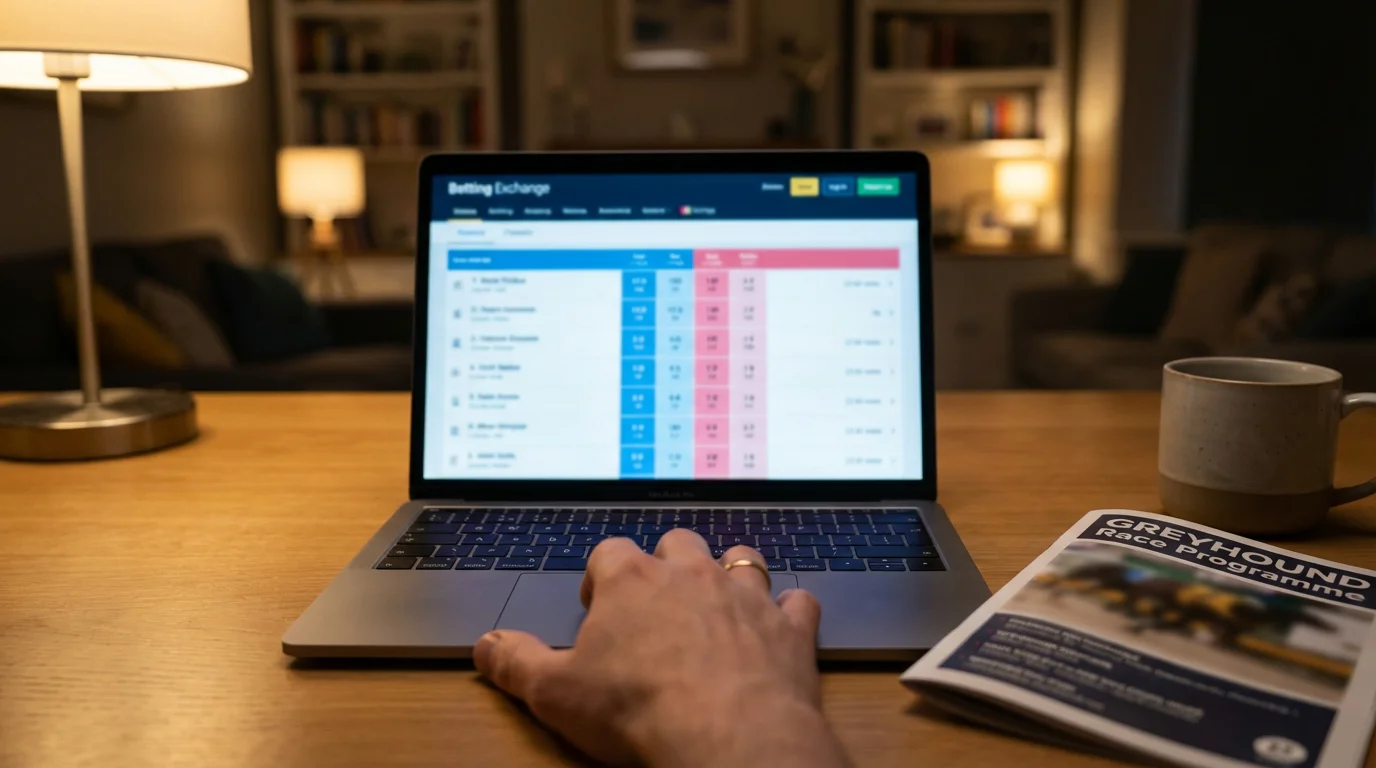
An exchange doesn’t set the odds — you and every other punter do. The fundamental difference between a traditional bookmaker and a betting exchange is who sits on the other side of your bet. When you back a dog with a bookmaker, the bookmaker takes the opposite position: they pay you if you win, and they keep your stake if you lose. The bookmaker sets the price, builds in a margin, and manages their risk across the entire market. Find more strategy guides at dogracingoddsuk.
On an exchange, there is no bookmaker. You are betting against other punters. When you back a dog at 5/1, another user has laid that dog at 5/1 — they are betting that it will not win. The exchange facilitates the transaction and takes a commission on the winning side, typically between two and five percent depending on the operator and your activity level. Betfair, the dominant exchange for UK greyhound racing, operates this model across most British and Irish dog meetings.
This peer-to-peer structure creates two immediate consequences for the greyhound punter. First, you can lay as well as back. Laying a dog means betting against it — you profit if it loses and you pay out if it wins. This is impossible with a traditional bookmaker and opens up an entirely different strategic dimension. If you believe a dog is overrated by the market — priced too short relative to its actual chance — you can lay it rather than trying to identify which of the other five dogs to back.
Second, exchange prices often differ from bookmaker prices, and sometimes significantly. Because there is no built-in overround in the same way a bookmaker constructs one, exchange odds can be more generous. The total implied probability across all six dogs on an exchange market is often closer to one hundred percent than on a bookmaker’s book, where it might sit at a hundred and fifteen to a hundred and twenty-five percent. In practical terms, this means the price available on an exchange can be a point or more of odds better than the best bookmaker price — though this depends entirely on the depth of the exchange market.
One important distinction: exchanges do not offer Best Odds Guaranteed. When you back at a price on an exchange, that is the price you receive. If the SP turns out to be higher, you have no recourse. The BOG safety net available from traditional bookmakers does not exist in the exchange environment, which means the decision to use an exchange for a specific bet should account for the loss of that protection.
Liquidity and Limits: Where Betfair Falls Short on Greyhounds
Betfair greyhound markets are thin — and thin markets mean big spreads. The exchange model depends on liquidity: the more money available to be matched, the tighter the gap between the back and lay prices, and the more closely the market reflects the true probability of each outcome. For Premier League football or horse racing at Cheltenham, exchange liquidity is deep and the markets are efficient. For a Tuesday afternoon BAGS meeting at Sunderland, it is a different story entirely.
Greyhound exchange markets are among the thinnest on Betfair. The matched volume on a typical graded race at a midweek meeting might be a few hundred pounds — a fraction of what a comparable horse race attracts. Low volume creates wide spreads: the best available back price might be 5/1 while the best available lay price is 4/1. That gap represents real cost to the punter. If you want to back at a price that is actually available, you often have to accept a number several ticks worse than what a bookmaker is offering at the same moment.
The timing of liquidity matters too. Exchange markets for greyhounds tend to fill only in the final minutes before the race. If you want to place a bet an hour before the off, you may find very little money available to match against. This contrasts sharply with bookmakers, who offer fixed prices from the moment the early show is declared. For the punter who likes to take a price early and move on, the exchange’s late-filling markets are an operational inconvenience.
In-play trading on greyhound exchanges is practically non-existent for most races. The duration of a race — under thirty seconds — and the speed of the action leave almost no window for placing or adjusting bets once the traps have opened. Some major events attract enough pre-race liquidity to enable trading strategies (backing and then laying before the off to lock in a profit or cut a loss), but these opportunities are rare in everyday graded racing.
Commission also erodes the edge. Betfair’s standard commission rate starts at five percent on net winnings per market, though the rate varies by user package and was increased for some tiers in 2025. On a winning bet at 5/1, a five percent commission takes five percent of your profit — turning a fifty-pound return into forty-seven fifty. Over time, that commission is the exchange’s equivalent of the bookmaker’s overround, and it needs to be factored into any profitability calculation. A bet that represents value at the exchange price might not represent value after commission is deducted.
When Exchanges Make Sense for Dog Punters
The exchange is a scalpel — effective, but only for the punter who knows where to cut. Despite the liquidity limitations and the absence of BOG, there are specific situations where an exchange offers genuine advantages over traditional bookmakers for greyhound betting.
Major events are the clearest case. The English Greyhound Derby, the Golden Jacket, and other feature competitions attract significantly more exchange liquidity than routine graded meetings. The matched volume rises, the spreads tighten, and the available prices become more competitive. For these events, the exchange often provides better back prices than any bookmaker, and the lay market becomes deep enough to support strategies that are impossible on everyday cards.
Laying short-priced favourites is the second productive use. If your analysis consistently identifies favourites that are overbet — dogs priced at 6/4 or shorter that you assess as 2/1 chances — laying them on the exchange can be more efficient than trying to back one of the other five runners with a bookmaker. The lay bet profits regardless of which dog actually wins, as long as the favourite does not. In a six-dog race, a favourite loses roughly sixty to sixty-five percent of the time, and a disciplined approach to laying overpriced favourites can produce steady returns — provided you are selective and accurate in your assessment.
The third use case is arbitrage or hedging. When a price discrepancy exists between a bookmaker and the exchange — say a bookmaker offers 6/1 on a dog while the exchange lay price is 4/1 — a punter can back with the bookmaker and lay on the exchange to lock in a guaranteed profit regardless of the result. These opportunities are rare in greyhound markets and the margins are slim, but they do occur, particularly around non-runner adjustments and late market movements. Also explore our greyhound racing strategy.
For everyday graded racing, however, the bookmaker usually wins. Better liquidity, earlier price availability, BOG protection, and no commission make traditional bookmakers the more practical choice for the majority of greyhound bets. The exchange is a specialist tool for specific situations — not a wholesale replacement for the bookmaker relationship. The punter who understands when to switch channels, and does so deliberately rather than habitually, extracts value from both environments without suffering the limitations of either.